
We work in Richardson and the surrounding DFW north suburbs. Call us at +1 (682) 254-4938 to describe what you're seeing and get a quote.
Why Concrete Work in Richardson Is Different
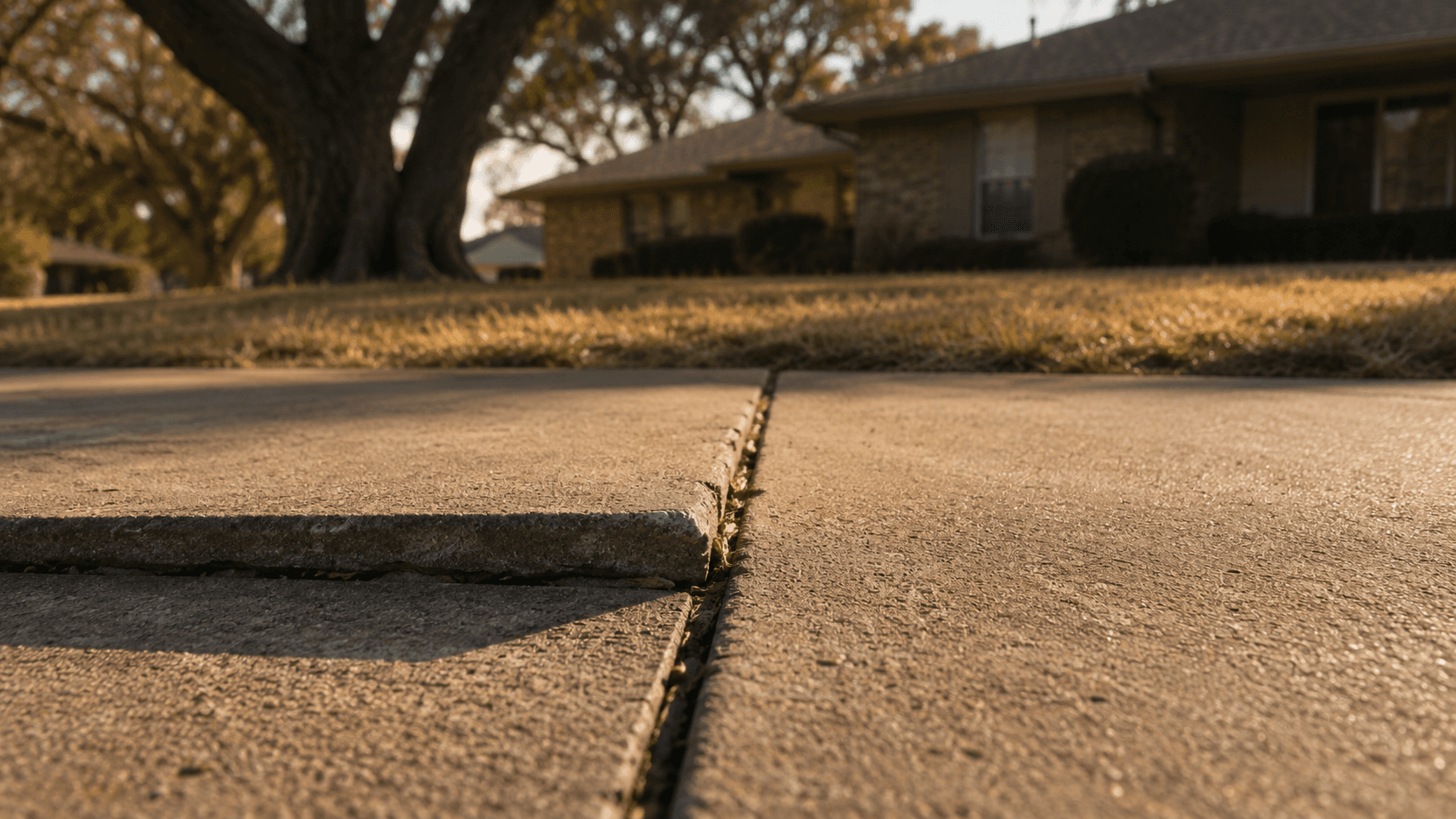
The dominant soil series here is Houston Black, which makes up 55% of the mapped unit at Richardson's seed location. Its linear extensibility — the measured percentage of volume change between wet and dry states — is 17%. That puts it in the "very high" shrink-swell category, the highest bucket in the USDA classification. In practical terms: the ground underneath your slab is not stable. It moves with moisture.
The last 12 months have included 14 weeks where at least a quarter of the county sat at D1 (moderate) drought or worse. D1 is dry enough to pull measurable moisture out of the top soil layers without triggering the kind of cracking you'd associate with an extreme drought year. That steady pull-and-rebound cycle is what opens hairline cracks in slabs. It's not one dramatic weather event; it's the accumulation.
Richardson also straddles two counties — Collin (48085) and Dallas (48113). The drought rollup across both came back with the same profile: D1 peak, 14 weeks with at least a quarter of the county at D1+, and zero weeks at D2 or worse over the past 53 recorded weeks. No emergency event this year, but enough persistent dryness to keep the clay working against your concrete.
Annual precipitation runs 36.1 inches, with May as the wettest month and August as the driest. That swing — heavy spring rain into bone-dry late summer — is exactly the pattern that stresses Houston Black. The clay takes on water in May, expands under slabs, then releases it through August and contracts. Repeat for 50 years and you understand why Richardson's concrete is in a different repair category than a city built in 2010.
Services We Cover
- Driveway replacement and repair — cracked, sunken, or spalling driveways poured on Houston Black almost always have a subgrade problem, not just a surface one. We address both.
- Patio and flatwork installation — new pours, expansions, and resurfacing. Proper subbase prep matters here more than anywhere else in Texas.
- Foundation inspection and repair — a 1974-era slab in Richardson is a different animal than a 2010 build in Frisco or McKinney. Half a century of clay cycling on a slab from that era means we're often looking at differential settlement and old plumbing penetrations as much as the concrete itself.
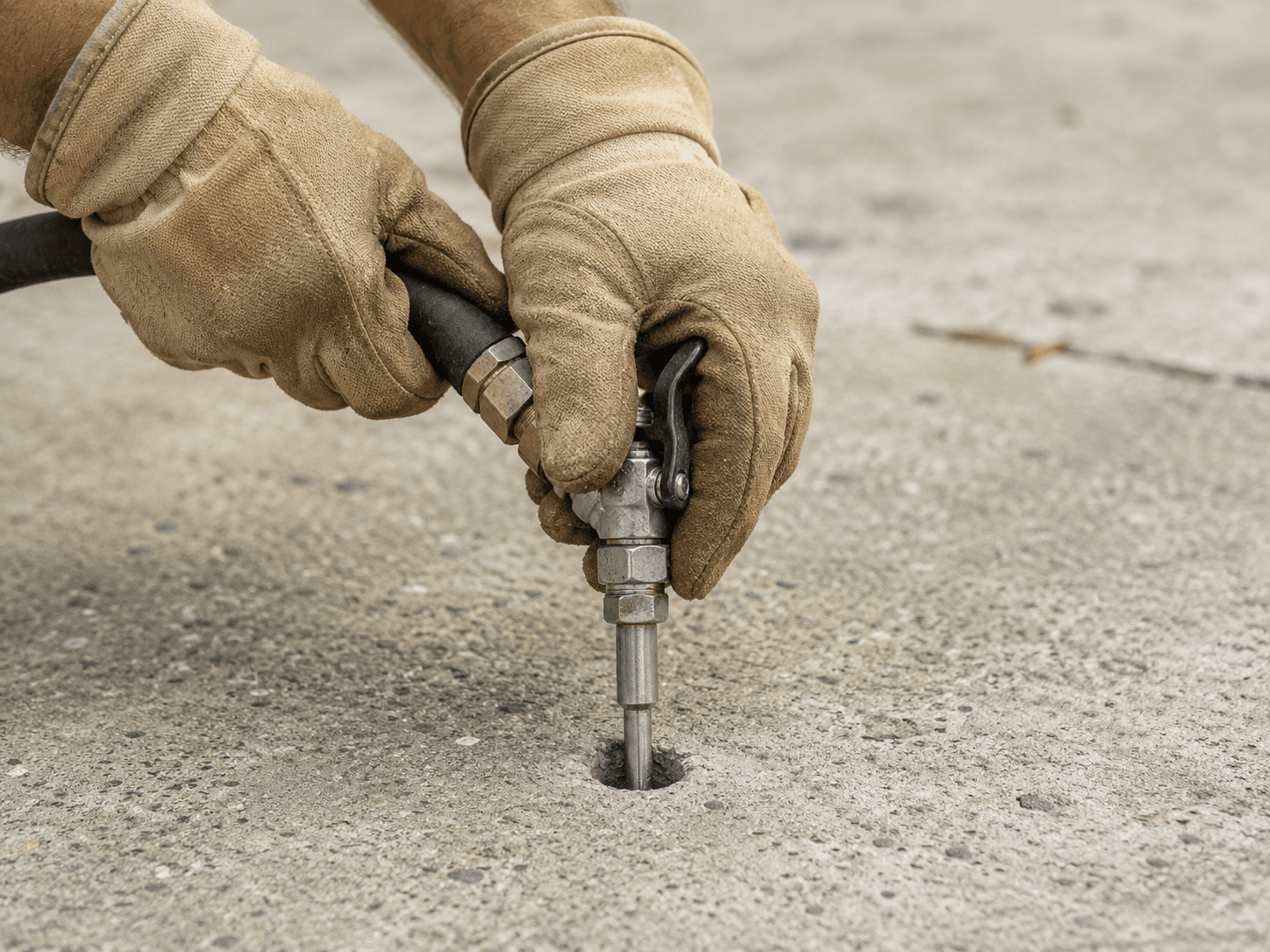
- Concrete leveling — sunken sections of sidewalk, driveway apron, or patio can often be lifted rather than replaced. We assess whether that's the right call or whether the section needs to come out.
- Slab work for additions and outbuildings — garages, sheds, covered patios. New pours in Richardson require careful attention to compaction and edge thickness given the soil conditions.
Sub-service pages with full pricing context and process details are linked from each item above as they go live.
What Older Richardson Homes Typically Need
The median home in Richardson's 75080 ZIP was built in 1974 — making the local housing stock meaningfully older than every other city in this network (Allen median 1999, Plano median 2001, Frisco and McKinney both median 2010). That age gap matters for concrete in a few specific ways.
After five-plus decades of clay movement, most original-pour driveways and walkways in this housing stock show at least some cracking, and a fair number have settled at control joints or around tree roots that were saplings when the neighborhood was new. The trees are mature now; the roots are in the slab.
Foundation symptoms in this era of construction tend to show up as doors that stick seasonally, gaps along trim lines, and diagonal cracks running from window corners — the classic Houston Black pattern of differential settlement. These aren't always structural emergencies, but they warrant an evaluation before they become ones.
Backyard concrete — patios and pool decks especially — often shows the most visible damage because it was poured to lighter specs and has less load bearing down on it to resist the clay lift. A homeowner-poured patio from 1985 on uncompacted fill is a common starting point for a conversation.
Richardson's owner-occupancy rate in the 75080 ZIP is 53.5%, which means roughly half the units are rental. Landlords and investors in Richardson face the same soil conditions as owner-occupants — the clay doesn't care who holds the deed.
Neighborhoods We Work In
Our service area covers all of Richardson, from the older subdivisions south of Belt Line up to the Bush Turnpike along the city's north edge. The two neighborhoods that show up with formal designations in the open geographic record are Renner Junction and University Place, but most of the calls we field reference older, well-known pockets that pre-date that record — Richardson Heights (platted in 1950, the city's first big post-war subdivision, sitting just east of US-75 where Central Expressway opened in 1954), Canyon Creek up north of Campbell Road with its rolling lots and mostly 1960s ranch builds, and the streets around UT Dallas and the Telecom Corridor that filled in through the 1970s and early 1980s.
The reason we list neighborhoods at all is that the conversation differs by where you are. A Richardson Heights driveway that was poured in 1955 has had 70 years of Houston Black underneath it; a Canyon Creek patio from the late 60s is on the same clay but typically on a different lot grade because of the rolling terrain up there. The soil report doesn't change — Houston Black is Houston Black across the city — but the symptoms and the right repair approach do shift with how the lot was originally cut and how the drainage was laid out.
If your property doesn't fall in any of those named pockets, that doesn't change anything for us. We work the whole city footprint.
Get a Quote
Describe what you're seeing — a crack, a slab that's dropped, a foundation question, a new pour you want to plan — and we'll tell you what it likely is and what it costs to fix.
Call +1 (682) 254-4938 to reach our Richardson line directly. We schedule site visits for estimates, not phone guesses.
Talk it through with someone who works Richardson.
Describe what you're seeing — a crack, a sunken slab, a foundation question, a new pour. We'll tell you what it likely is and what it costs to fix.
Call (682) 254-4938